Personal
projects that I built for myself
-
Steward AIHackathon winner
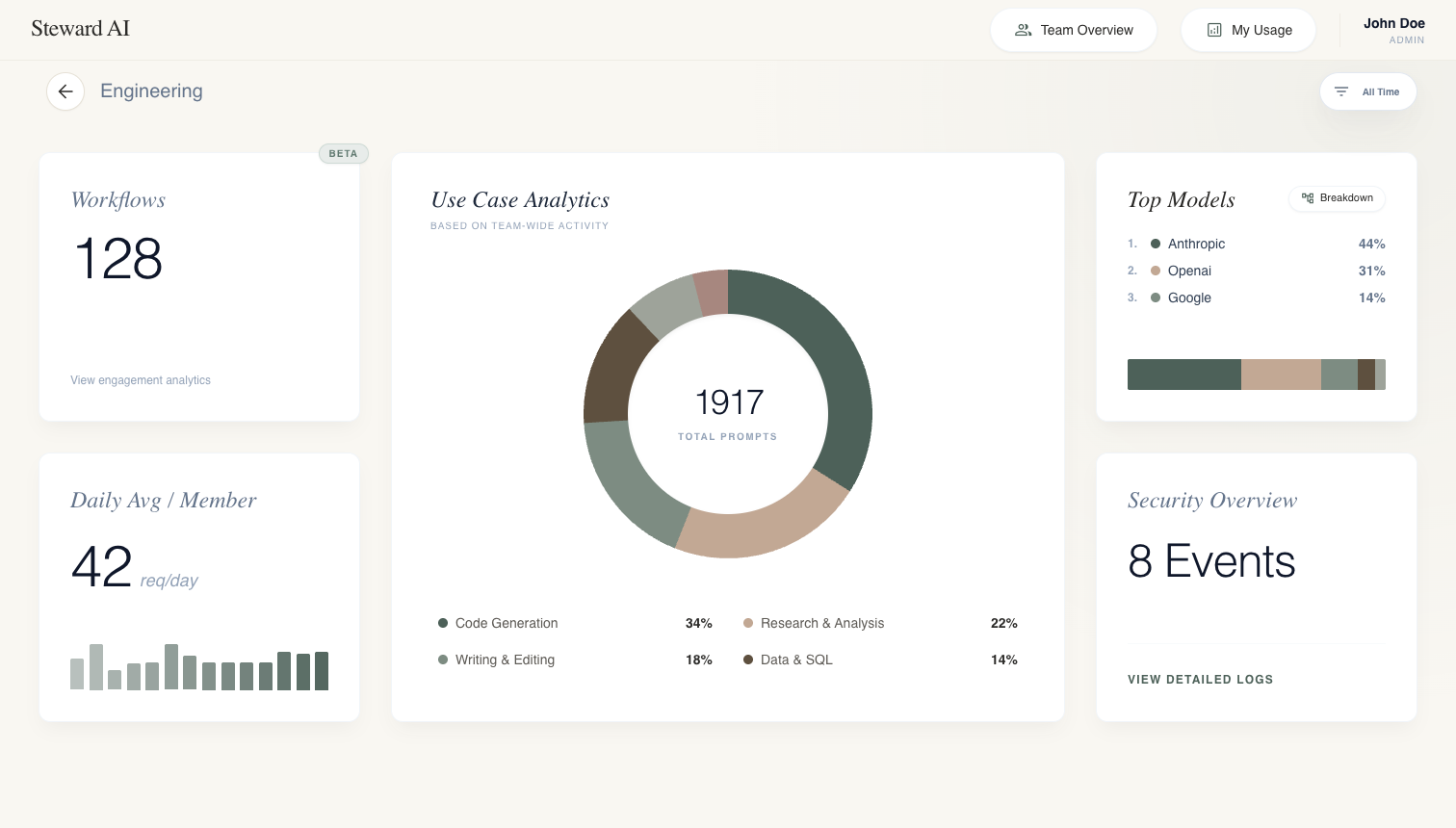
A desktop application that lets businesses understand their employees' AI usage. An Electron app and a browser extension read the accessibility-tree text of AI tools as people use them and a Haiku 4.5 model categorizes each conversation. The platform also identifies PII's included in prompts, along with files, which it displays inside the dashboard
Technical specifications
- How it works
- Use-case analytics, per-employee drill-downs, a prompt-flow breakdown, and a security log where flagged uploads open in a file viewer
- Built on
- An Electron app built on HTML and JavaScript displays data, and uses Swift to grab data from macOS desktop applications, paired with a browser extension to grab DOM text from Chrome. Data is stored in Supabase
-
Unpak System
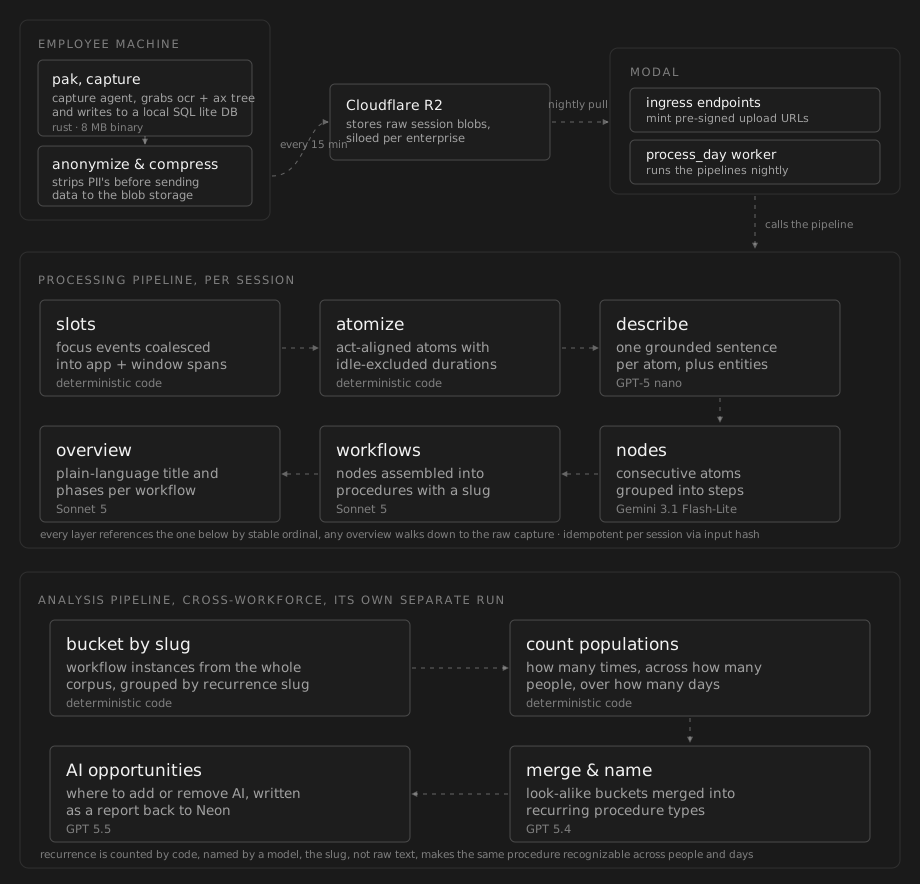
View repoThe capture and processing core of Unpak. A Rust agent on each machine reads the focused window through AX Tree and OCR capture, and scrubs PII's on device. After storage, a pipeline then distills that raw activity down in stages: individual actions get grouped into tasks, and tasks into workflows. Cheaper models handle the high-volume grouping and smarter models handle the complicated reasoning sections. A nightly pass clusters recurring workflows across the workforce into families, so variations of the same workflow can still be deterministically grouped together
The idea: a worker's day is made up of various workflows, each a generally set list of tasks. If you can map those workflows and build a picture of how a company actually does its work, down to the smallest step, then you can pinpoint where an AI solution plugs in most effectively and compute, down to the minute, how much time it would save
Technical specifications
- Built on
- Rust for the agent, Swift for the macOS client, Python for the pipeline. SQLite on the device, Neon Postgres upstream
- Hosting
- Modal for the pipeline, Cloudflare R2 for storage
-
Unpak Dashboard
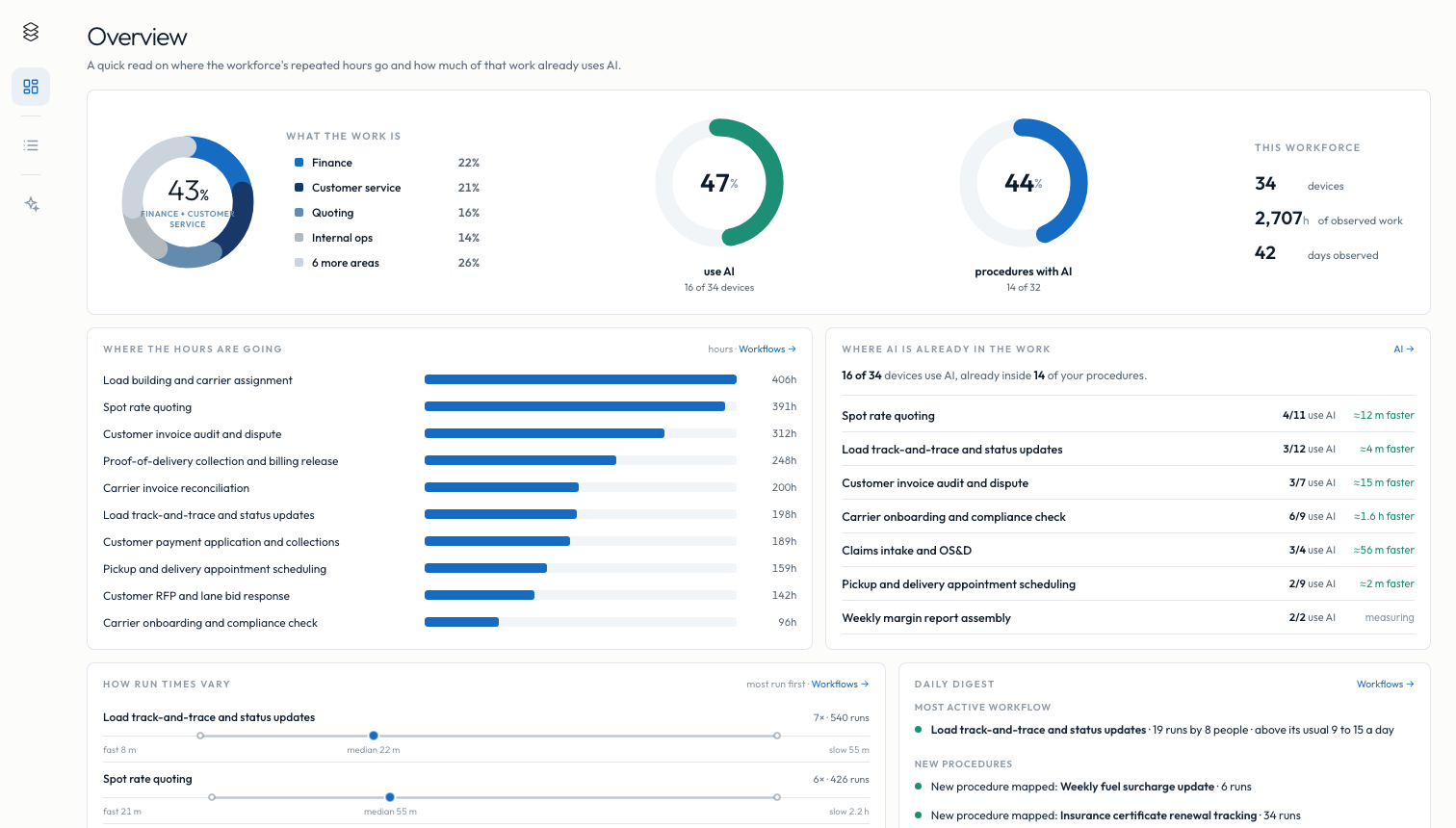
View repoUnpak's dashboard. It shows the customer the workflows their workforce repeats, where the hours go, and where AI has already shown up in the work
Technical specifications
- Built on
- Astro, with the data connected to a Neon Postgres database
- Hosting
- Cloudflare Pages
-
Unpak Website
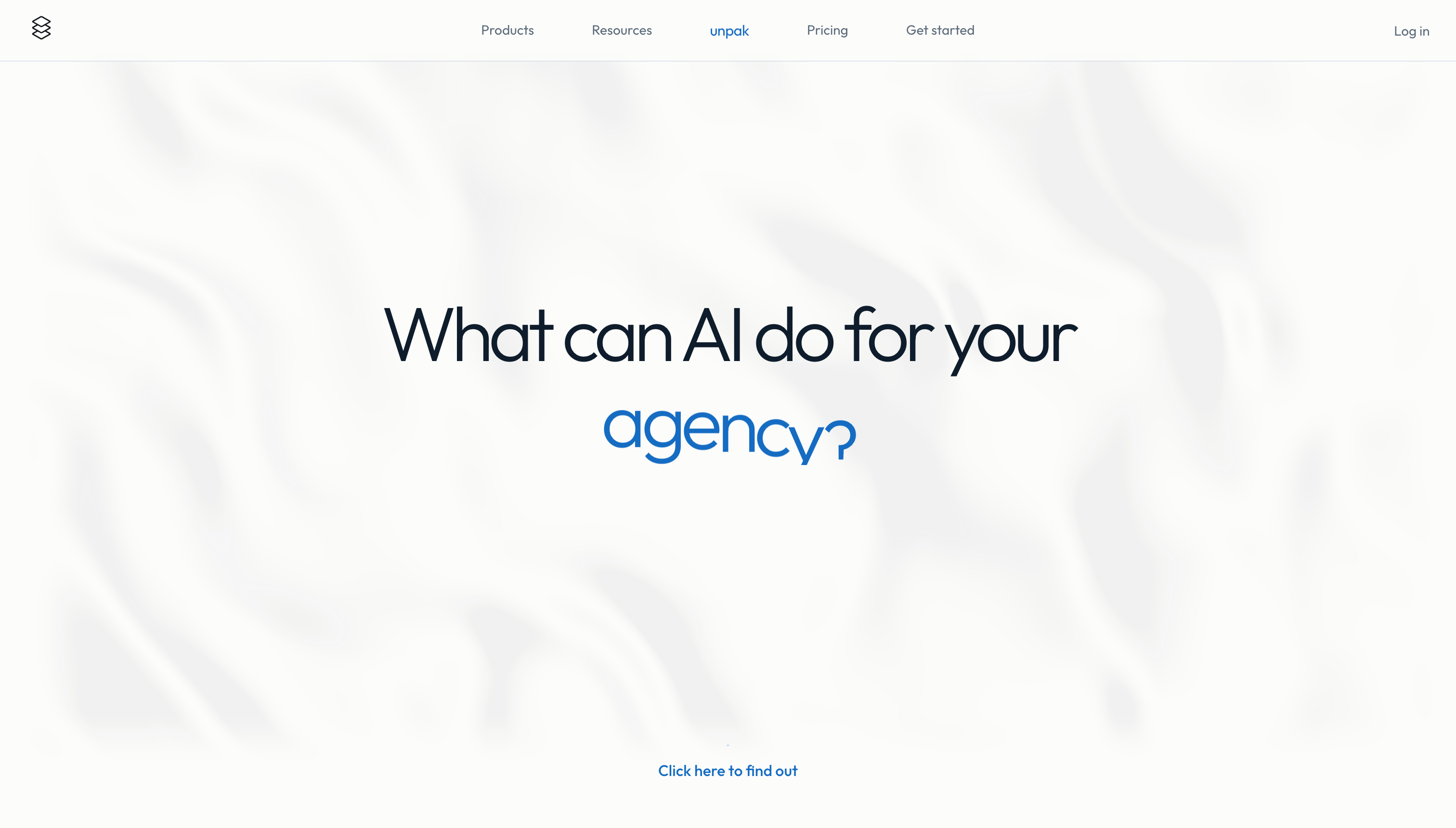
The main website for Unpak. One of my most polished pieces of work
Technical specifications
- Built on
- Astro, Tailwind, and JavaScript for the diagrams and the WebGL ripple shader
- Hosting
- Cloudflare Pages
-
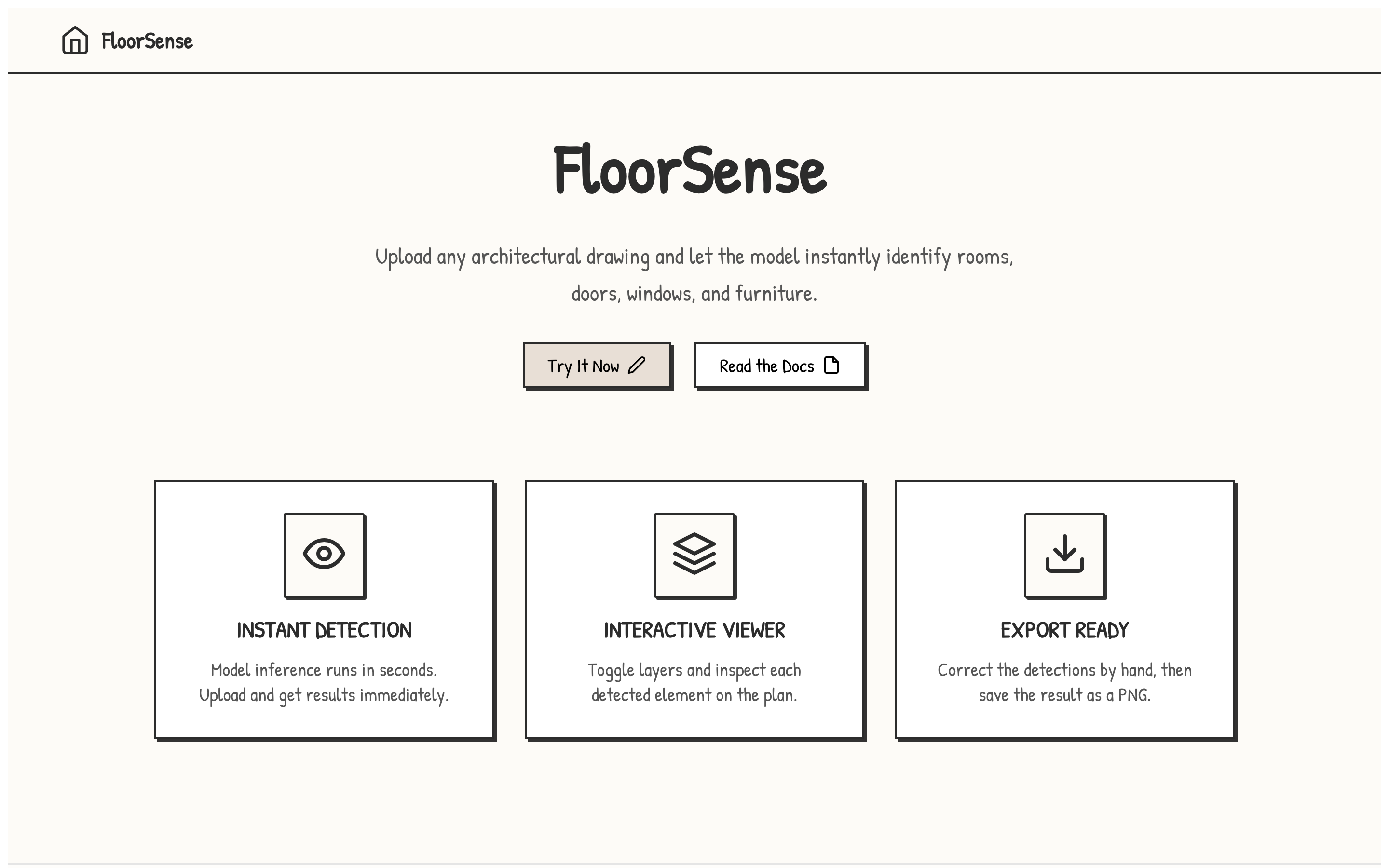
FloorSense
View repoA computer vision web app that identifies architectural elements in floorplan images using YOLO-based object detection, with real-time detection visualization and correction tools
The idea: floor plans are notoriously difficult to digitize, since there are so many different variations of objects in them, and no standardized system to create them. A model that can visually classify what's on the page gets around that
Technical specifications
- Built on
- Next.js, React, TypeScript, Tailwind
- Why I built it
- I was attempting to impress a group of founders at a company I wanted to work at, so I built the product they showed me in a demo
- Hosting
- Website hosted on Vercel, YOLO model hosted on Roboflow